Democracy Requires Visibility
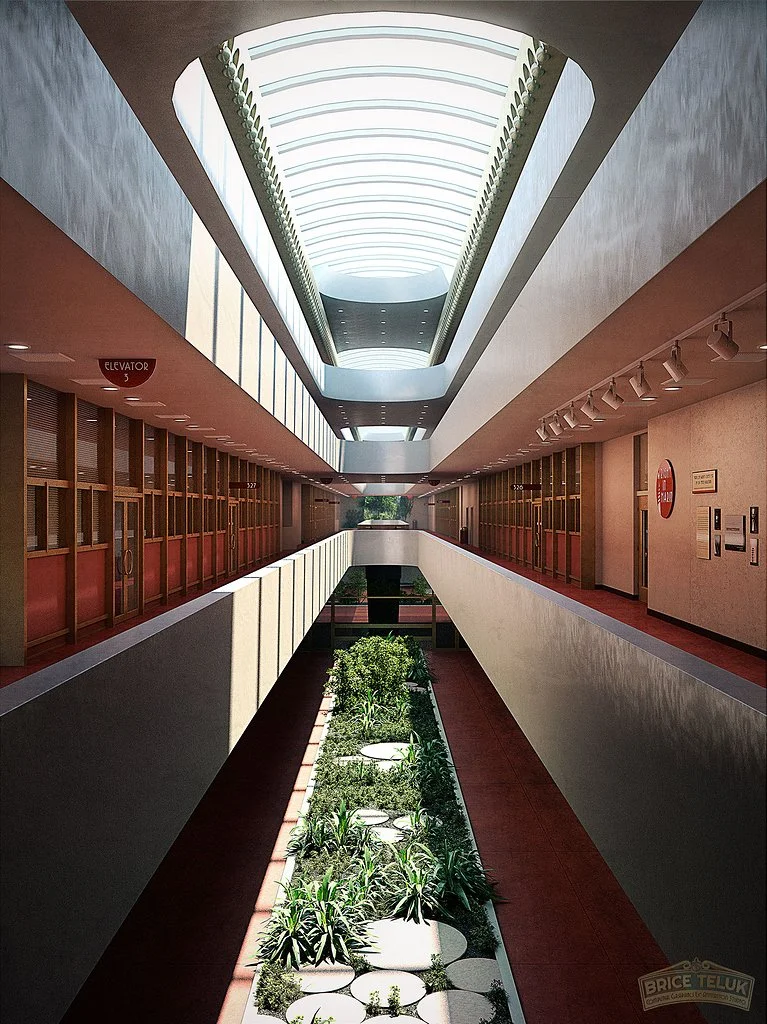
The first thing you notice at the Marin County Civic Center is how much you can see. Walk along the balconies and you can look across buildings, down into courtyards, and out toward the hills. Sunlight pours through the atriums so that even offices deep inside remain open to light and air.
Frank Lloyd Wright designed it this way intentionally. Public buildings, he believed, should feel open and connected to the people they serve. Anyone who has walked those corridors senses the idea behind the design: government should not hide from the public.
Democracy works best the same way. If citizens are expected to support a system, they should be able to see how it works.
In Marin, governance is spread across many boards and agencies—cities, the County, school districts, fire districts, water agencies, transit authorities, and other special districts. Each holds its own meetings and adopts its own budget. This structure reflects something valuable: it allows communities to make decisions close to home, and that tradition is worth protecting.
But there is a reality that connects all of these agencies. The same community funds them. Residents and businesses pay the property taxes, sales taxes, parcel taxes, service fees, utility rates, and assessments that support this entire network. Governance is divided, but the funding comes from one community.
And that creates a challenge: visibility.
You vote on a school parcel tax. You pay a city sales tax downtown. Your water bill rises. A fire protection assessment appears on your property tax bill. Transportation funding shows up on the ballot. Each decision is debated by a different agency at a different meeting. Each agency can honestly say its own budget is balanced. But the resident paying those bills rarely sees the full picture.
A healthy democracy does not ask citizens to guess how their government works. It should be possible for ordinary residents to understand how decisions connect, how obligations accumulate, and how today’s choices shape tomorrow’s responsibilities.
Marin itself reminds us how interconnected our lives are. Our watersheds cross city boundaries. Our roads and evacuation routes serve multiple communities. Our infrastructure overlaps. Our public finances are connected in the same way—and transparency should reflect that reality.
California recognized this principle long ago. The Brown Act requires government meetings to be open, agendas to be posted in advance, and citizens to have the right to attend and speak. The law is built on a simple belief: the public is not just watching government—the public is part of it.
Good governance requires openness. It also requires honesty about costs and priorities. Communities need clear explanations of what projects will require, how they will be funded, and what the long-term commitments may be. These are not just technical issues. They are questions of trust.
This is not an argument for centralizing power. Marin’s many boards and districts serve an important role. But local control should not come at the expense of clarity. A system can remain decentralized and still be easier for residents to see and understand.
When people understand how public obligations add up across agencies, trust grows. Conversations become more informed. Communities can plan more responsibly for the future.
Marin has long been known for civic engagement. People here care deeply about their communities and take public issues seriously. That tradition is one of Marin’s greatest strengths. But participation works best when citizens can clearly see the system they are being asked to support.
When the same community funds the system, that community should be able to see the system.
The Civic Center reminds us of that principle every day. Its open walkways and light-filled spaces reflect the belief that public life should be visible to the people who sustain it. Our civic institutions should reflect that same spirit.
When citizens can see clearly, they can participate more thoughtfully. And when citizens participate thoughtfully, democracy becomes stronger for everyone.