

Legalizing Home Kitchens Is Smart Economic Policy for Marin
MEHKOs are not just a tweak to the health code; they are a proven framework for turning home kitchens into legal income, jobs, and a pipeline of future food businesses. Across California, home‑kitchen operators report that these businesses help them pay rent, stabilize volatile incomes, and in many cases launch food trucks, catering companies, or small restaurants. The benefits fall most heavily to women and immigrants, who already cook and sell food informally but lack legal protection, market access, and basic institutional support. If Marin chooses to treat MEHKOs as economic development and immigrant mobility tools, it can keep opportunity in‑county instead of exporting talent across the border to Sonoma.
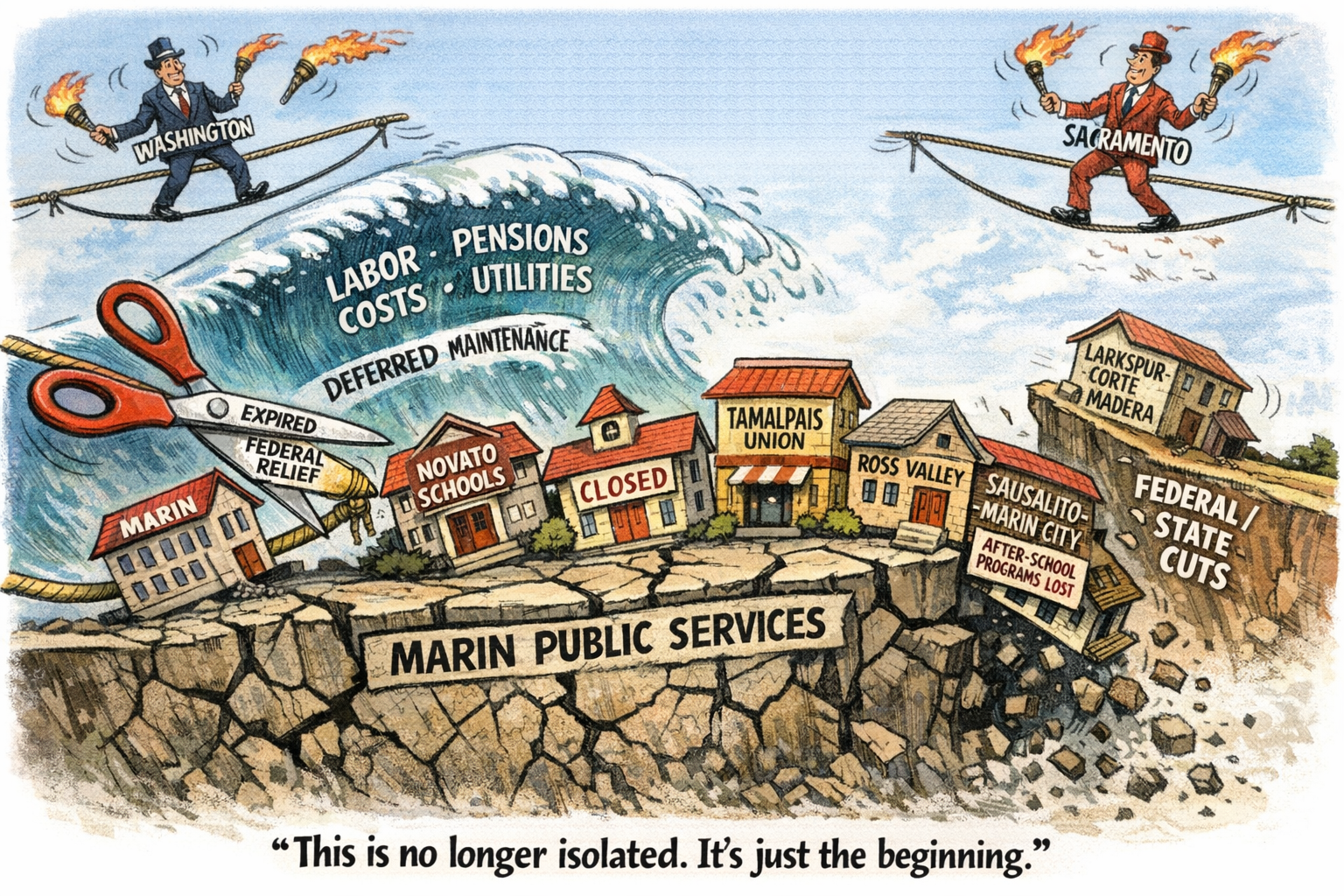
Budget Cuts Across Marin: This Is No Longer Isolated
Across Marin, multiple public agencies are cutting services at the same time, from cities and school districts to the County itself. These cuts are not isolated management failures but symptoms of a shared structural problem. Temporary federal and state funding expanded budgets beyond what ongoing revenues can support. Now that those one-time funds are gone, costs for labor, pensions, maintenance, and operations continue to climb while revenue growth stalls.
Marin’s fiscal stress reveals deeper issues in how local government is organized. Dozens of agencies maintain separate finance, HR, payroll, IT, and legal systems that duplicate overhead and weaken bargaining power. At the same time, capital projects often add facilities without lowering long-term operating costs. Instead of more short-term fixes, Marin needs structural reform that ensures development pays its true cost, administrative services are shared, procurement is pooled, and capital investments are designed to reduce ongoing expenses. The choice ahead is between continuing cycles of cuts or building a more efficient and resilient system of local governance.

When We Connect the Dots, Our Community Finally Thrives
If you live in Novato or in Bel Marin Keys, Black Point, Indian Valley, or Loma Verde, you pay taxes and fees to more than a dozen separate government agencies. The county, the city, the fire district, the water district, the sanitary district, the flood control district, the school districts, and the transit authority all bill you, each with their own rules, priorities, and plans made in isolation. They dig up the same streets on different schedules, stack fees on top of each other, and make major decisions in long weekday meetings that most working people cannot attend. The result is a system that costs more, delivers less, and leaves residents feeling shut out of the process. The answer is not more taxes without oversight. The answer is transparency first, then trust.

A GI Bill for Civic Workers: Why Shared Equity Beats Workforce Rentals
Marin is losing its workforce to a retirement wave it cannot afford to ignore. The county's largest age cohort is now 55 to 59. More than 23% of residents are already 65 or older. The civilian labor force has shrunk by nearly 14% since 2000, and Marin has roughly 17,000 fewer millennials than a county its size should expect. The people who might fill those gaps cannot afford to live here.
The standard answer is subsidized rental housing. Build it, own it, manage it forever. That model places a permanent liability on the public balance sheet while the people inside it remain renters, building no equity and no long term stake in the community.
There is a better model, and we already know it works. After World War II, the GI Bill did not solve the veteran housing challenge by building government barracks. It backed mortgages, lowered barriers to entry, and let families build wealth through ownership. Marin should do the same for its teachers, firefighters, nurses, and deputies. Shared equity, down payment support, and community land trusts can unlock ownership for civic workers at a fraction of the long term cost of public rentals, and every dollar recycled when a home sells can help the next family in.
The question is not whether to invest in workforce housing. We already are, through higher wages, recruitment costs, and constant turnover. The question is whether we invest in a system that works once, or one that works repeatedly.
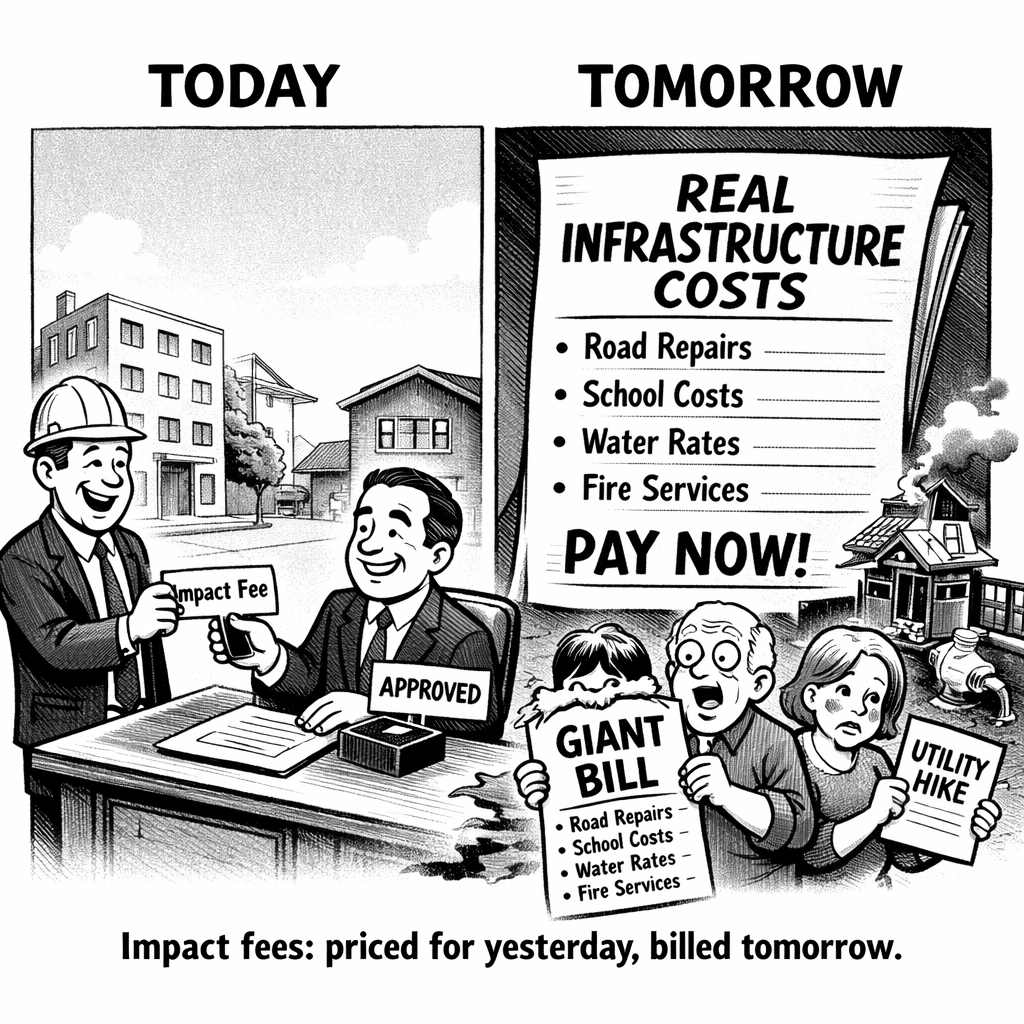
How Impact Fees Can Shape Where Housing Goes in Marin
Impact fees are one of the few tools Marin communities still fully control, even in a world of state housing mandates. When they are set honestly based on real infrastructure costs, they act as a transparent price signal that pulls growth toward places that can absorb it and away from places where it quietly shifts tens of millions in costs onto existing residents. Used well, they make growth pay its fair share instead of sending residents the bill years later through higher rates, new parcel taxes, and crumbling roads and schools.
In Marin today, that is not how most impact fees work. Fragmented agencies, outdated nexus studies, and defaulting to state caps mean we routinely undercharge where infrastructure is already strained and waive fees where capacity is scarce, effectively subsidizing the most expensive growth patterns. Fixing this is not about stopping housing or jacking up fees across the board; it is about regional coordination, honest math, and a shared technical framework so every jurisdiction can align its fee schedules with reality and protect residents from hidden, long-term costs.